New School Year, New Friendships
Children enjoying the excitement of summer travel can sometimes yearn for their school friends. Twin sisters visiting China desperately wanted to celebrate their birthdays with Room 3 classmates. The teachers were happy to hold a party for the girls at Circle Time and sent them a rousing video. After staying a month in France, a boy missed his classmate so much, his mom sent a video of her son talking about all the things he wanted to do with his friend when he returned. The heart wants what the heart wants. Thinking about friends going through normal routines at school also brings feelings of stability to travelers who are adjusting to new places and people.
As we gather for fall, both teachers and parents usually breathe a collective sigh of relief as we step back into the organized world of school schedules and familiar faces. However, the first days and weeks of school also introduce waves of change.
Children who have established friendships may discover that their “besties” have grown over the summer and have new interests and even behaviors. The new school year provides the opportunity for returning students to shed preconceived ideas about others and form more expansive, inclusive relationships. In fall’s new classroom groupings, everyone benefits by expanding their abilities to socialize with new people. Children who are new need support to make connections and feel safe in a new environment. When adults are tuned to the new newness of the back-to-school experience, they can help children in every circumstance to gain social competence.
How wonderful when we view the start of school as a time to be curious about other people—to really see the people around us. Parents provide role modeling by expressing interest in children’s classmates. “I wonder what Jason is interested in now” or “I see new people in your class. Do you know the new students’ names? Have you had a chance to get to know them?”
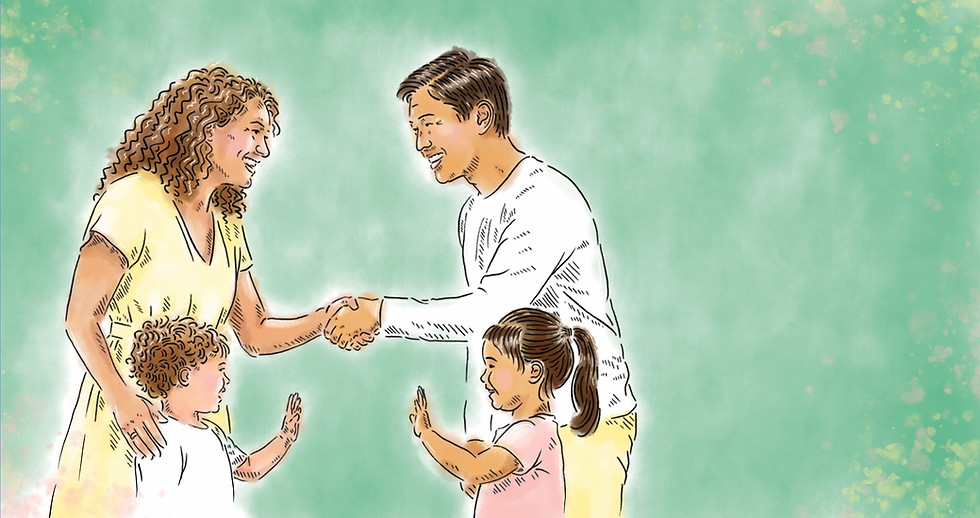
Parents play an important role in building community by actively introducing themselves to new families and teaching their children to practice greeting classmates by saying hi or waving. We don’t want to pressure children to speak in social situations, but we can explain that acknowledging new people helps newcomers feel like they belong.
Adjusting to the newness of a group can be temporarily discomfiting, but it is also a time bright with glimpses of future friendships, as in the Elvish greeting from The Fellowship of the Rings, “A star shines on the hour of our meeting.”