
“Aha” Experiences
- Susie Kohl
- Feb 19
- 2 min read

What we call “light bulb moments” can occur at any age. Picture playing a game of peek-a-boo with an infant. The joy is always the moment when the baby is suddenly awe-struck by seeing your face reappear after it was hidden. How could that be? Do you still exist even when I couldn’t see you? To an infant that burst of new reality feels miraculous. Scientists note that “aha experiences” can be catalysts throughout life for reorganizing the way our brains process information.
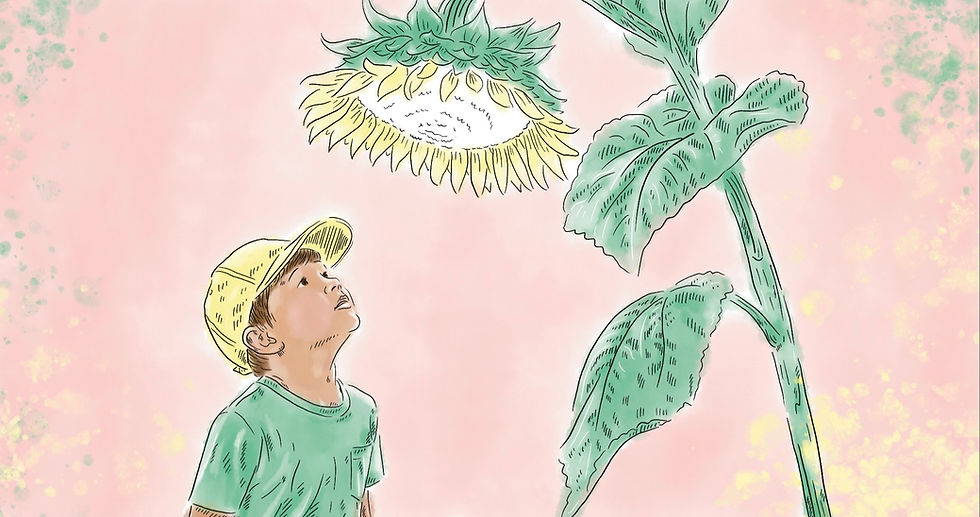
I’ve been pondering this phenomenon after a three-year-old stopped me recently and insisted on sharing his “aha” insight. “Guess what?” he asked. “My dad used to be my age!” After his dramatic delivery, he looked at me expectantly then pulled his hair and said, “And he had curly hair too!”
This may be a preschooler’s first glimmer into the reality that his father once had a life separate from his, one that preceded his existence. What a concept! Later, as he grows older, he may learn about challenges that his dad or his mom went through earlier in their lives.
When a child has a difficult experience, a parent will often say, “I felt that way sometimes when I was your age,” introducing a little of their childhood history. These little scenarios and longer anecdotes are what Professors Robyn Fivush and Marshall Duke call “family stories.” Their research at the Family Narratives Lab at Emory University shows that when children or young people hear about their ancestors’ successes and struggles, they can often cope with challenges more resiliently.
We have always been interested in children learning about family stories at school, and this week we have all been invited to participate in an exciting community art project sponsored by the Diversity, Equity, Inclusion & Belonging Committee: making a huge paper chain.
The project relates to family histories with a special focus on immigrants—the obstacles they endure as well as the gifts they bring to our country. Children in second grade and up will discuss the bravery it takes to move to a new country. They will also have the opportunity to think specifically about challenges their ancestors may have experienced and learn about the families of their classmates. Preschoolers will focus on how to welcome new people.
Thanks to Marissa Hemenez, Karina Mardrigal, and Chloe Gilmore for the inspiration and implementation of this huge creative project. Watching the massive paper chain take shape over this week has the potential for creating a community aha experience—a week of realizations that we are all connected through actions of caring and love.


Comments